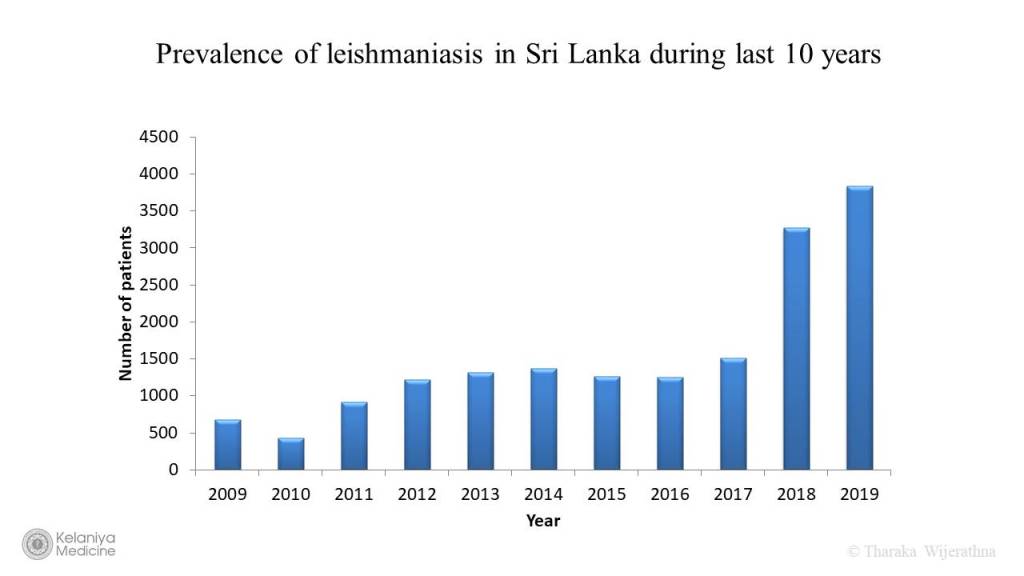
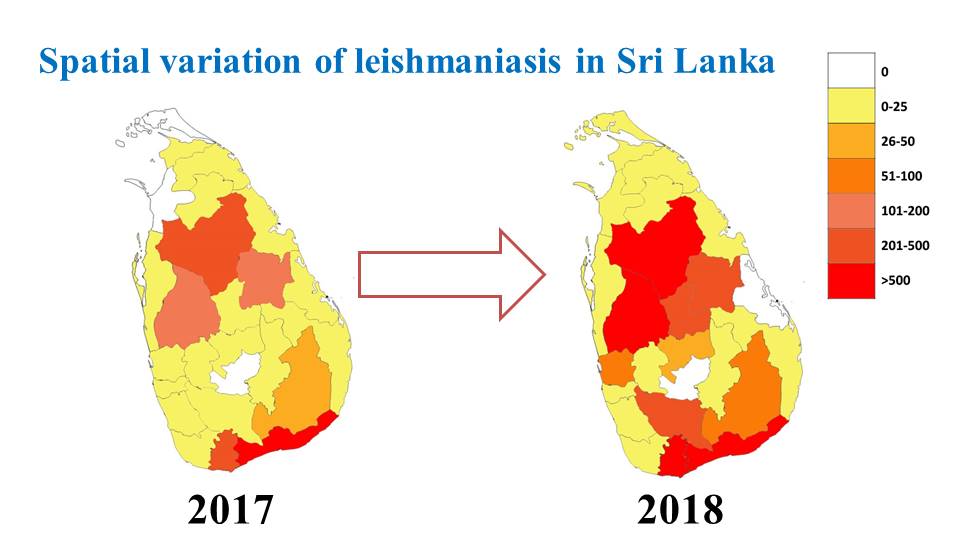
Leishmaniasis is a parasite disease established in Sri Lanka with a continuously increasing prevalence.
The risk factors of leishmaniasis may differ from one geographical region to another as well as one form to another. Therefore, demography, epidemiology of the disease and risk factors at endemic setting should be studied to determine proper interventions. Furthermore, the studies on the direct and indirect costs associated with leishmaniasis would allow decision-making authorities and policy planners to manage resources through appropriate prioritization with the limitations in fund allocations.
Leishmaniasis is an infectious disease caused by protozoan parasites of genus Leishmania. The disease has three main clinical manifestations: visceral leishmaniasis, cutaneous leishmaniasis and muco-cutaneous leishmanaisis. Sri Lanka is one of the 98 endemic countries for cutaneous leishmaniasis in the world. Causative agent for this disease in Sri Lanka is L. donovani and the main suspected vector is Phlebotomus argentipes.
My studies were aimed at assessing socio-economic, demographic and landscape/household surrounding related risk factors of leishmaniasis, the economic impact of leishmaniasis from national as well as household perspectives and development of time series prediction models to forecast the disease incidence.

 tharakawijerathna.com