Selecting a Scientific Journal to Publish Your Paper
Getting the research findings published in a reputed journal is one of the main targets of a researcher. Is this journal a good one?, Is this is a predatory journal?, what is the impact factor of this journal?, what is the “impact factor”? These are some of the questions many researchers seek answers to. In this article, I am hoping to give a brief guide on how to recognize a good quality scientific journal .
First, I will briefly explain the scientific publication process. After the general writing process and revisions of the manuscript by supervisors and yourself, you will have the final version of the manuscript. Then you must find a suitable journal and submit your paper to that journal. Once you submit the article, the editor of the journal assesses the manuscript. If it falls within the scope of the journal, formatted correctly and of good quality as per the editor’s assessment, he/she send it to 3 or more reviewers for the critical assessment of the article. This is a blind review process and the reviewers do not know who the authors are (There are exceptions read more on peer review types here). Once the reviewers give their comments on the article, the editor make a decision based on these comments. If the editor needs more reviews he/she will request from some other reviewers. If the comments are negative, but can be amended, the editor will ask revisions from the authors and the review process will again repeat from the submission stage. If the comments are completely negative, the editor will reject the paper. If the comments are good and suitable for publication, paper will be accepted (with major or minor revisions).
(Authors must be aware of the plagiarism. Always publish your work only. Do not copy paste from other sources. Do not share the data before publishing. Also, you can submit only to a one journal at a time, strictly adhere to that.)
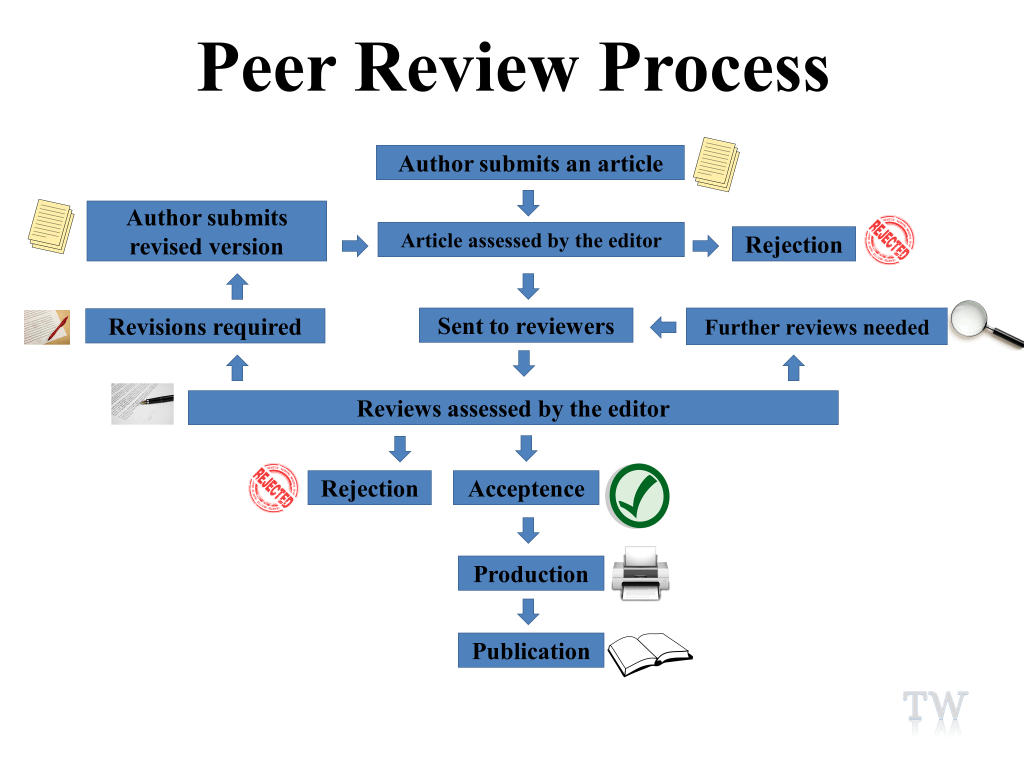
First thing to worry about is the subject area of the journal. If you do not select a relevant journal, you will end up submitting to a long list of journals without even reaching the review stage. Read the journal instructions well. Get an idea about what kind of articles they ask for. Check one or two issues to see if articles relevant to your area are published in that journal. Next important thing is the publication fees. Certain journals charge the authors for publishing their papers. However, there are discounts and waivers available on some occasions. Always read about article processing charges. If your grant provides funds for publications, you will have no issue. Otherwise you have to be very careful when selecting the journal. A number of publishers provide open access (article accessibility to non-subscribed readers) publications without charge. Some journals charge only for open access publishing. Therefore, it’s better to go for such a publisher’s journal if you don’t have funding to cover the publication cost. Read the author instructions carefully before submitting.
The other problem is that there are lots of scam journals. Therefore, if you do not submit your article to a proper journal, you will be wasting your data, time and efforts. Even the journal is not a scam journal or a predatory journal, the quality of the journal is a key factor to be considered when publishing your research. There are thousands of fake and scam journals on the internet. Beall’s predatory journal list includes some of these journals. However, this list is not complete and a lot of new scam journals are started each year. One way of assessing the journals quality is checking their indexing (citation indices) information.
There are citation indices, which are databases that list down good quality research publications. Once the journal is indexed in one of these indices, all the articles published in that journal will appear in that citation index. The most widely accepted index is the Science Citation Index (and it’s larger and online version – Science Citation Index Expanded- SCIE). The master journal list is an online platform maintained by the current publisher of SCIE, which provide indexing information and impact factor values of journals. The impact factor given in Journal Citation Reports (JCR) published by Clarivate analytics each year contains impact factors for all the valid journals.
Again there are some scam citation indices. Index Copernicus (IC) is a database founded in 1999. A large number of predatory journals are included in it, IC is a heavily criticized and considered a worthless index. Google scholar has the same issue as a number of predatory journals are listed in the search engine. Therefore, journals mentioning google scholar and index copernicus as their indexing services, but are not found in mater journal list are very likely to be scam journals and has no academic value of publishing in those journals. Web of science is the platform that makes the science citation index available online. But web of science is not a proper index itself as that has a large number of scam journals indexed in it. Often scam journals mention that they are indexed in web of science implying that its indexed in Science Citation Index. Therefore, it’s always better to refer master journal list to confirm the indexing of the journals.
Impact factor is a measure of the number of citations of articles published in that journal for a particular year. Only one impact factor value is available for a journal and it is published by Thomson Reuters (Clarivate Analytics). Only the journals cited in Science Citation Index is given an impact factor. All the other IF’s are scam measures devised for commercial purposes. The journal in this link is an example for this. It uses SJIF as the impact factor, which is a scam impact assessing service. In the assessment of journal’s quality only the impact factor mentioned in Journal Citation Reports by Thomson Reuters (Clarivate Analytics) should be used. One of the key strategies for not wasting time worrying about the quality is choosing a well reputed publisher such as Elsevier, BMC, Hindawi, Frontiers, Wiley online, Springer nature, Nature Publishing Corporation etc. The impact factor mentioned in their web sites is correct. However, plenty of good journals, which are not published by these publishers, are available. Therefore, it is valuable to have a good awareness on the evaluation of authenticity and quality of the journals.
 tharakawijerathna.com